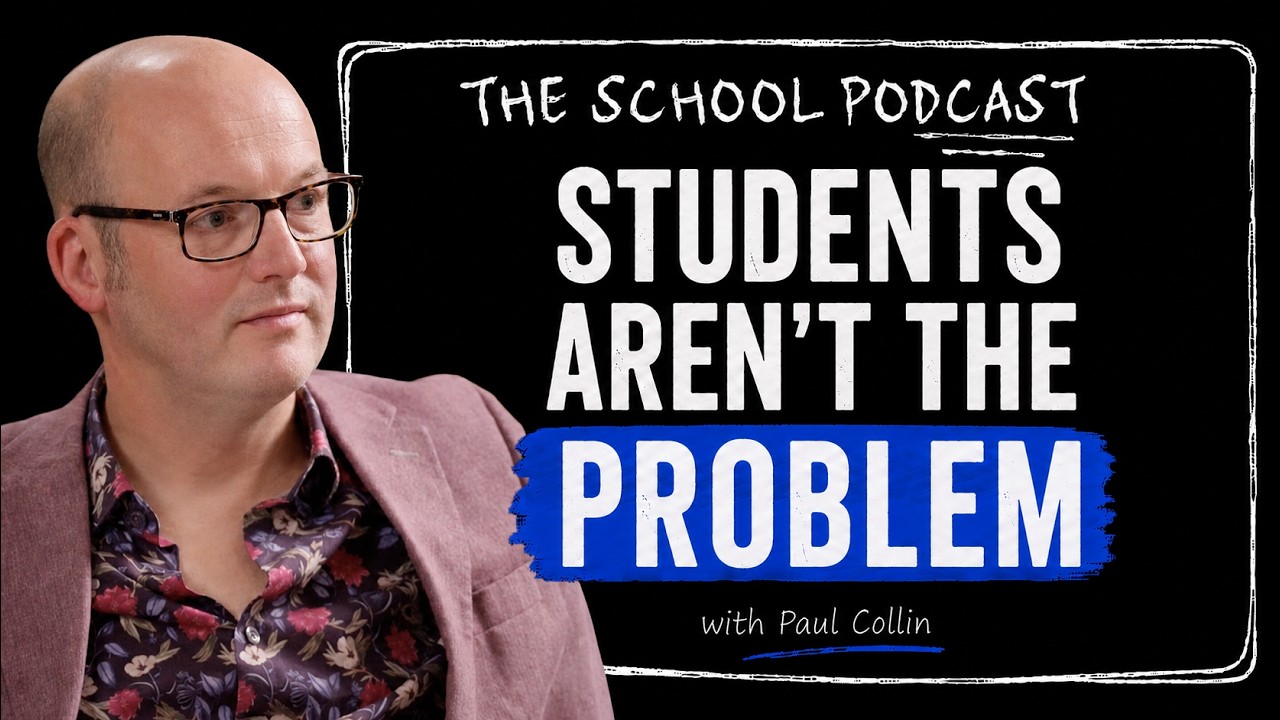
Why You Can’t Cheat School Improvement – School improvement has never been more important. With increasing pressure around attendance, behaviour, staff wellbeing and student outcomes, many schools are searching for the next strategy that will transform performance. However, as former headteacher and executive leader Paul Collin explains on The School Podcast, lasting improvement is never about finding a quick fix.
Drawing on more than 25 years in education, Paul shared why sustainable school improvement is built on strong foundations rather than short-term initiatives. His message throughout the conversation was simple but powerful: you can’t cheat school improvement.
 Watch the full interview on YouTube →
Join The School Podcast Newsletter
The #1 source for real impact in education.
Exclusive insights from educational greats, powerful breakdowns, no fluff, just value, clarity and impact straight to your inbox.
Be the first to access exclusive deals, unseen value and early access to upcoming events.
Join now – don’t miss out.
One of the key themes discussed was the importance of school culture. While policies, systems and accountability all have their place, they only become effective when they’re supported by positive relationships, trust and consistency. Schools that experience long-term success are rarely those introducing a new initiative every term. Instead, they’re the schools that remain committed to their vision, develop their staff and create an environment where both adults and young people can thrive.
The conversation also explored behaviour and the importance of looking beyond the surface. Rather than focusing solely on what a student has done, Paul encouraged leaders to ask why the behaviour is happening in the first place. Understanding the reasons behind behaviour doesn’t mean lowering expectations or accepting poor choices, but it does create opportunities to build stronger relationships and deliver more meaningful support.
Attendance was another significant topic. Improving attendance isn’t simply about implementing new systems or increasing sanctions. Young people are far more likely to attend school consistently when they feel connected to their environment, experience positive relationships with staff and believe they belong. Creating that sense of belonging takes time, but it remains one of the most effective ways to improve both attendance and outcomes.
Leadership was another recurring theme throughout the episode. Paul reflected on the reality that great leaders don’t build successful schools by trying to do everything themselves. Instead, they coach others, develop future leaders and create cultures where improvement becomes everyone’s responsibility. Sustainable leadership is about building capacity rather than dependency.
Cameron Parker and Paul also discussed the pressures facing school leaders today, including increasing accountability, changing educational priorities and the growing complexity of supporting disadvantaged communities. Throughout the conversation, they returned to the idea that while immediate action is sometimes necessary, meaningful school improvement is always a long-term process.
The episode serves as a reminder that there are no shortcuts when it comes to transforming schools. Better attendance, stronger behaviour, improved outcomes and healthier staff cultures are all the result of consistent leadership, clear values and a relentless focus on people.
For school leaders, teachers and trust executives looking to create lasting change, the message is clear. School improvement isn’t something that can be installed overnight. It’s something that must be built, protected and sustained over time. That’s exactly why you can’t cheat school improvement.