A quiet classroom, books open with no disruption. Everyone appears to be paying attention, but are they actually learning?
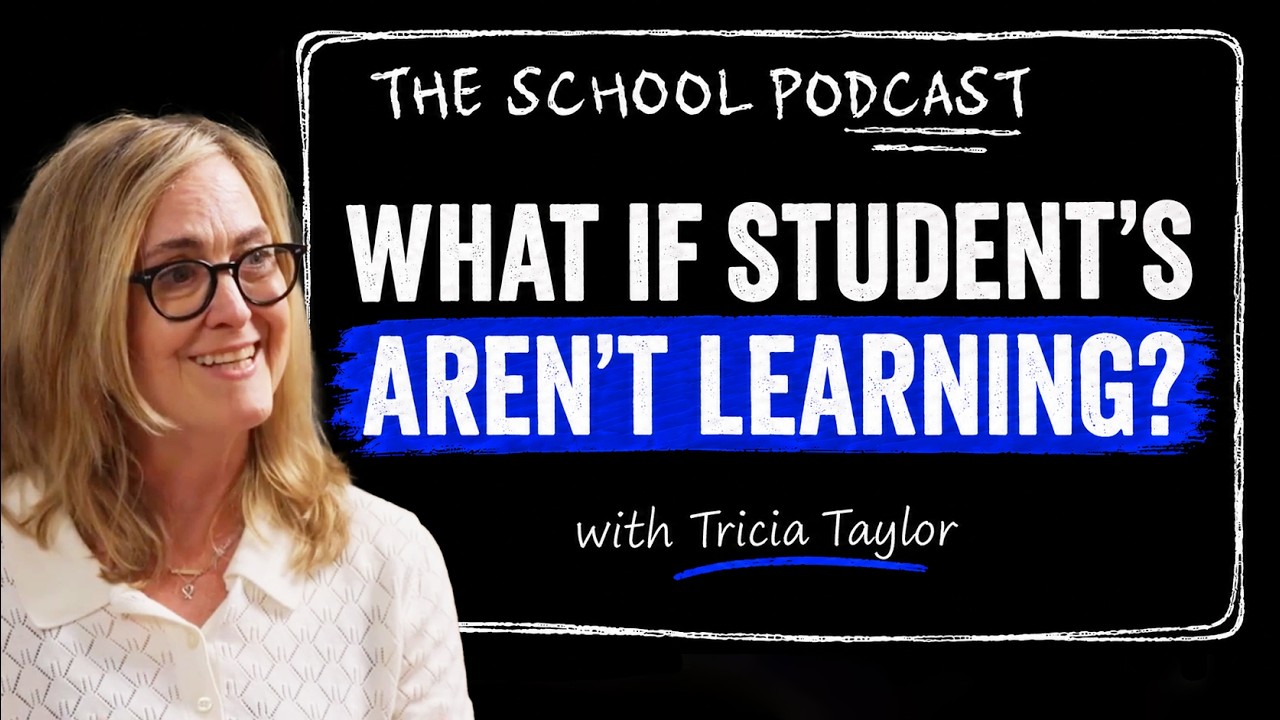
That question sits at the heart of the latest episode of The School Podcast, as Cameron Parker is joined by education consultant, author and former teacher Tricia Taylor for a fascinating conversation about the science of learning, classroom practice and the difference between compliance and genuine learning.
Check out Tricia work here –> https://www.tailoredpractice.com/
 Watch the full interview on YouTube →
Tricia has worked in education across the UK, USA and internationally and is the co-author of Connect the Dots: The Collective Power of Relationships, Memory and Mindset in the Classroom. During the conversation, she challenges educators to look beyond what learning appears to look like and think more deeply about what is actually happening inside the minds of students.
Compliance vs Learning
One of the most powerful parts of the conversation comes when Tricia reflects on visiting classrooms where everything appears to be going well. Students are behaving, they are looking towards the teacher, they appear engaged.
But, as Tricia explains:
“What’s happening here is compliance.”
Students can become incredibly good at looking like they are learning. They can sit quietly, copy from the board, complete tasks and avoid getting into trouble without necessarily thinking deeply about the content. For teachers and school leaders, this creates an important distinction. Good behaviour can create the conditions for learning, but good behaviour alone does not prove that learning has taken place. Teachers still need to check understanding, ask effective questions and create opportunities for every student to think.
The Illusion of Learning
The same problem can happen outside the classroom. Cameron and Tricia discuss students who genuinely believe they have spent hours revising. They have created flashcards, highlighted notes, made colourful posters, sat with their books open for an entire evening.
But time spent revising and effective revision are not necessarily the same thing.
Tricia describes this as an “illusion of learning.”
Students can feel productive because they have invested time into something without testing whether they can actually retrieve and use the information. The conversation explores working memory, retrieval practice, attention and why learning requires effort. Tricia explains three important realities for students: working memory is limited, learning requires hard thinking and learning takes time. Understanding those principles can completely change how a young person approaches revision.
Can Students Really Multitask?
Phones naturally become part of the conversation. Many young people believe they can revise while watching Netflix, checking messages or moving between different apps. Tricia challenges the idea that students are simply better at multitasking because they have grown up surrounded by technology. Instead, attention is constantly switching between tasks.
That switching has a cost; It is another reason why teaching students how to learn can be just as important as telling them that they need to revise. Rather than simply saying “work harder”, schools can help students understand what effective effort actually looks like.
“My Teacher Doesn’t See Me”
The episode goes beyond cognitive science and explores the importance of relationships. Tricia recalls speaking to a 15-year-old student who was struggling with school and asking whether she liked being there.
Her response was simple:
“My teacher doesn’t see me.”
It became a powerful example of what relationships in education really mean. A student can physically be in a classroom every day without feeling that they are genuinely part of the learning taking place. Feeling seen is not simply about a teacher being friendly. It can mean knowing a student’s name, checking whether they understand, valuing their contribution and demonstrating through actions that the teacher believes they are capable of learning.
As Tricia explains throughout the episode, positive relationships, memory and mindset cannot always be separated. They interact with each other.
Are We Hearing From Every Student?
Questioning is another major theme. A teacher can ask a question, receive the correct answer from one confident student and move on. But what has that actually demonstrated?
It has demonstrated that one student knew the answer. It hasn’t necessarily shown what the other students in the classroom understood. Tricia discusses strategies including hands-down questioning, checking for understanding and creating a classroom culture where students know that getting something wrong is part of learning.
Importantly, this does not mean removing challenge. Students can feel safe while still experiencing high expectations. The conversation explores how teachers can support students who experience anxiety, SEND students and those who regularly respond with “I don’t know”, without automatically lowering expectations or removing them from participation.
Evidence-Informed, Not Evidence-Controlled
Tricia describes herself as a “research nerd”, but the conversation also explores the danger of making education unnecessarily complicated. Research matters, evidence matters but classrooms are filled with individual human beings. Tricia argues for an evidence-informed approach where research provides teachers with a strong foundation while professional judgement helps them apply it within their own context.
Teachers understand their students, subjects and schools. The goal is therefore not to give every teacher an identical checklist of actions to complete. It is to combine what research tells us about learning with the expertise of the professionals working with young people every day.
Teachers Need Time to Think Too
Towards the end of the episode, Cameron asks Tricia what she would change about education if she had a magic wand. Her answer is time, more time for students to think and learn deeply.
More time for teachers to discuss their practice. More time to understand research, apply it, reflect and improve. The conversation highlights the pressure teachers can feel to simply “get through the curriculum”, particularly in secondary education where exams and accountability inevitably influence decision-making. Tricia argues that teachers need opportunities to continue developing rather than reaching a level of competence and then plateauing. Professional development should be more than another task added to an already busy workload.
AI, Social Media and the Future of Learning
The episode finishes by looking towards the future. Cameron and Tricia discuss phones in schools, social media, AI and what knowledge means when information can increasingly be accessed instantly. Tricia argues that knowledge remains incredibly important. But so does the ability to think, listen, communicate, challenge ideas and have genuine conversations with other people. Perhaps one of the most important messages from the entire episode is that it is okay to change your mind. Education should give young people the knowledge and confidence to think for themselves, discuss ideas and allow their thinking to develop when they encounter new information. That principle applies to adults too.
Watch The Full Episode
Compliance vs Learning is a wide-ranging conversation about what great teaching really looks like and how schools can create environments where students are not simply behaving, completing tasks or looking busy but genuinely thinking and learning. From cognitive science and revision to relationships, SEND, questioning, teacher development, phones, AI and education across the UK and USA, the episode brings together research and real classroom experience.
The full episode of The School Podcast with Cameron Parker is available now on YouTube, Spotify and Apple Podcasts. A huge thank you to Nisai Learning for supporting The School Podcast and helping make these conversations possible.