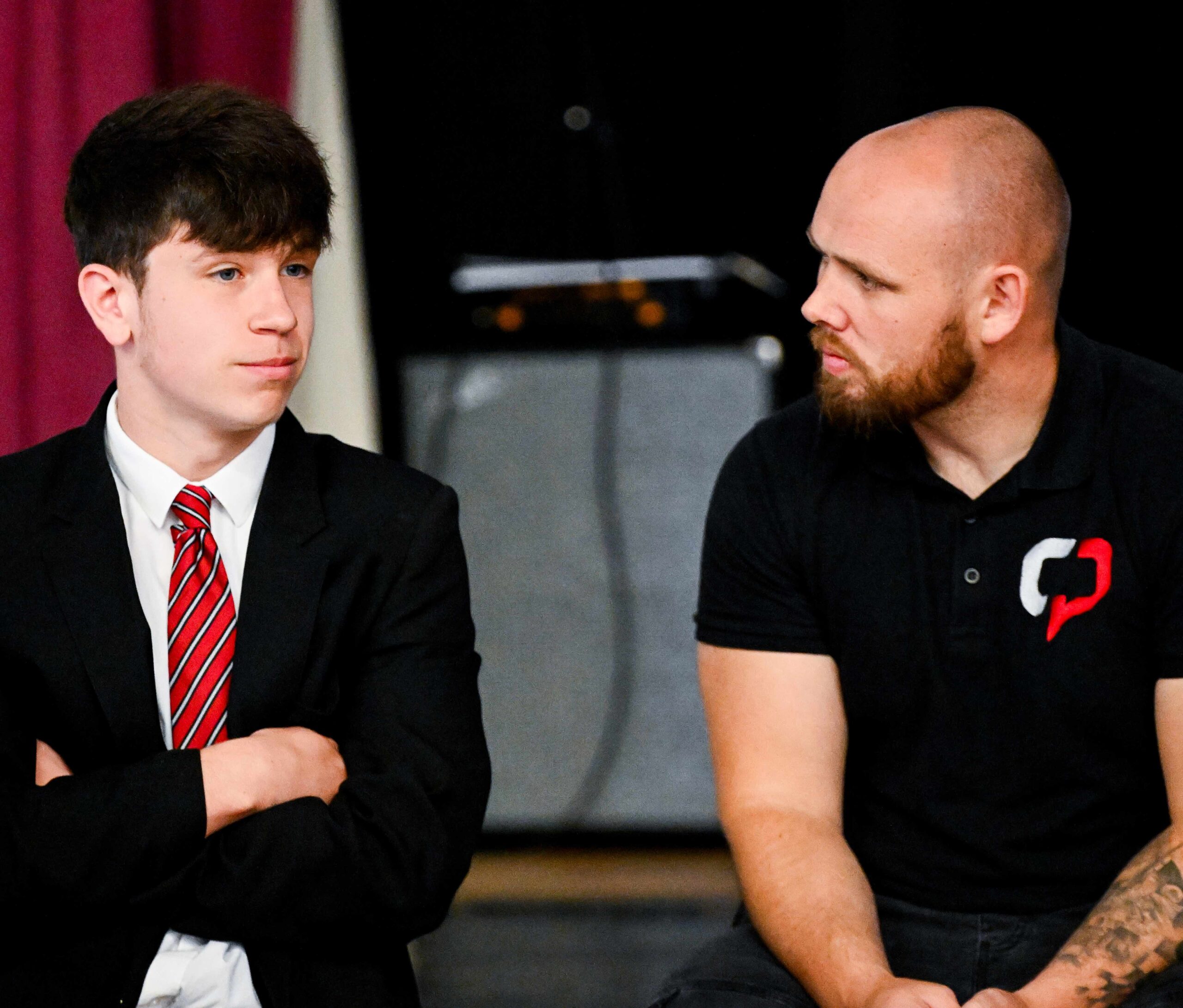
Why Students Say they Don’t Care about School – One of the biggest mistakes we can make in education is believing every student who says, “I don’t care.”
After more than 14 years working in schools, I’ve lost count of how many young people I’ve met who appear disengaged, disruptive or simply uninterested. But when you spend time building trust and asking the right questions, a very different story often emerges.
Recently, after delivering a session in a secondary school, a teacher sent me this message the following morning.
“The other student who was brought into your last session… was at school at 8:45 this morning (which is unheard of according to his Head of Year). He finally had the courage to speak to his Head of Year and one of the Deputy Heads and admit he is completely lost and overwhelmed with no idea where to start in terms of revision… We all agreed this morning that this would not have happened if it wasn’t for your session yesterday.”
Reading messages like that reminds me why I still love doing this work. But there’s a much bigger lesson here.
“I Don’t Care” Can Be a Defence Mechanism
One thing I’ve seen hundreds of times is students pretending they don’t care when, in reality, they simply don’t know how to access the work.
Imagine sitting in a classroom where it feels like everyone else understands what’s happening, while you’re completely lost. At first you try to keep up. Then you fall behind. Eventually, avoiding the work feels easier than admitting you’re struggling.
So instead of saying:
“I’m overwhelmed.”
It becomes:
“What’s the point?”
“I don’t care anyway.”
That was me. I even found myself doing it at university. Yes, I have ADHD and dyslexia, but this isn’t limited to young people with additional needs. Sometimes it’s simply human nature, protecting yourself from failure can feel safer than risking looking incapable.
Competence Drives Motivation
Research consistently suggests that one of our basic psychological needs is competence, therefore people are naturally more motivated when they feel capable. When students believe they can succeed, they engage. When they believe they can’t, many disengage before they’ve even started.
That’s why, sometimes, the answer isn’t pushing harder. It’s stripping everything back and creating a new strategy, by breaking tasks into manageable chunks. This will help students experience small wins, because small wins create momentum and over time that momentum builds confidence, then that confidence changes behaviour over time.
The Courage To Ask For Help
The second thing that stood out to me from this story wasn’t just that the student admitted he was struggling, it was that he felt safe enough to ask for help. I’ve worked in schools where students genuinely believe there is no point speaking to staff because they think nobody cares. In my experience, that usually isn’t true, teachers and school leaders care deeply. They are simply under enormous pressure, balancing hundreds of students, endless responsibilities and limited time. This isn’t about blaming schools. It’s about recognising that the schools making the biggest difference are the ones that consistently reinforce a culture of support, openness and psychological safety, where asking for help is seen as a strength rather than a weakness.
We Only Get One Chance
For many young people, GCSEs represent a pivotal point in their lives. The grades themselves don’t define a person, but the opportunities they unlock can have a huge impact on future choices. That’s why conversations like this matter. Sometimes the breakthrough isn’t another revision resource, sometimes it’s helping a young person feel seen, capable and supported enough to say:
“I’m struggling.”
Because once they say those words, everything can begin to change.
I actually think this deserves a full episode of The School Podcast.
Not another conversation about what’s wrong with education, but a discussion with school leaders about the practical strategies they’re using to help students feel more confident, more supported and more engaged.
I’d love to hear your thoughts.
Have you ever seen a student who looked like they “didn’t care”, but underneath was simply overwhelmed?