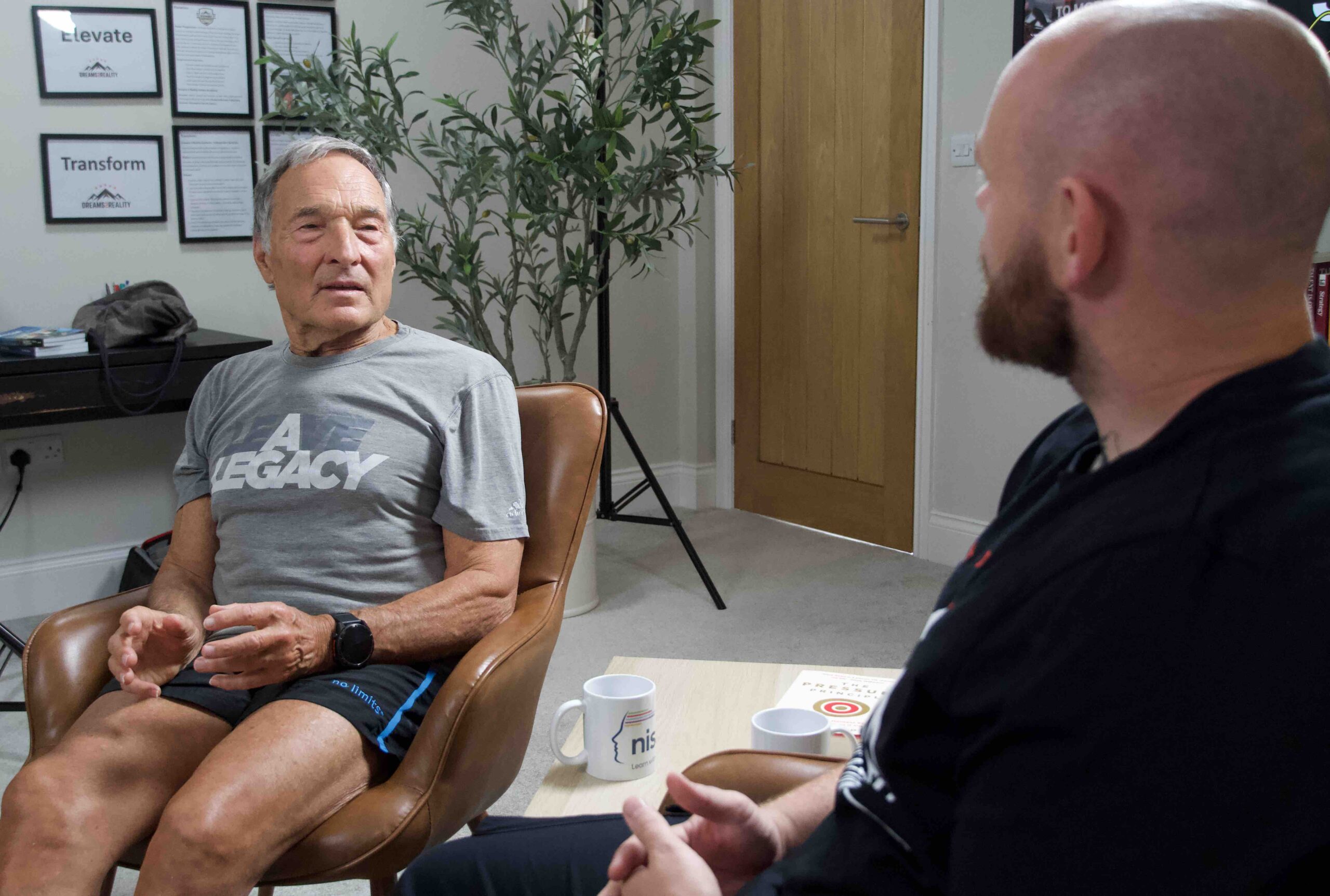
What can teachers and school leaders learn from someone who helped England win the Rugby World Cup, coached Jonny Wilkinson and worked with some of the world’s most successful athletes? Quite a lot, as it turns out. In this episode of The School Podcast, our founder Cameron Parker sits down with world renowned performance coach, author and former teacher Dr Dave Alred for a fascinating conversation about learning, motivation, pressure and the pursuit of improvement.
Best known for his work with Jonny Wilkinson and England’s 2003 Rugby World Cup-winning team, Dave has spent decades exploring what enables people to perform at their best. But what makes this conversation particularly interesting for educators is that Dave’s journey didn’t begin in elite sport. It began in the classroom, teaching in comprehensive schools across Bristol and despite going on to work at the highest levels of international sport, his philosophy remains deeply rooted in teaching, learning and helping individuals improve.
 Watch the full interview on YouTube →
Great Coaching Is Great Teaching
One of the first things Dr Dave Alred challenges is the way we value teaching compared to coaching. In sport, coaches are often celebrated for developing world class performers, yet Dave argues that the fundamental skills required are no different from those used by effective teachers. Whether you’re helping a 14 year old improve their writing or an international rugby player improve their kicking, the principle remains the same.
You identify where someone is, understand what they need to improve and support them through that process. Dave also introduces a fascinating way of approaching the relationship between coach and performer. Rather than making improvement personal, he separates the individual from their performance. There are three things: the coach, the individual and the performance. The performance becomes something both people can work on together.
For teachers, this raises an important question.
How often do we make feedback about the student rather than the work they’re producing?
How might that change the way young people respond to challenge?
Respect the Effort Before Correcting the Mistakes
One of the most powerful moments in the conversation comes when Dr Dave Alred reflects on his time teaching Maths and English to students who didn’t particularly want to be in school. He talks about the importance of respect, particularly when students are struggling. Rather than returning work covered in red corrections, Dave would ask students to leave spaces between lines and use green markings to highlight areas they could revisit. The intention wasn’t to ignore mistakes, it was to create an opportunity for students to identify, understand and correct them and importantly to recognise the effort they had already put in.
It’s an approach that encourages students to take greater ownership of their learning rather than simply being told what they’ve done wrong. For educators working with young people who have experienced repeated academic setbacks, this is particularly relevant. When students begin to associate effort with failure, getting them to try again can become one of our biggest challenges. Dave’s approach reminds us that how we communicate feedback can be just as important as the feedback itself.
The Ugly Zone: Where Real Improvement Happens
Perhaps one of the most valuable concepts explored in the episode is something Dr Dave Alred calls the Ugly Zone. It’s the point where an individual reaches the limits of their current ability and begins to struggle and according to Dave, that’s exactly where development needs to happen. He explains that every individual has their own margin for improvement. For some students, that margin might be relatively easy to identify because they regularly experience difficulty.
For others, particularly those who find academic work or sport naturally easy, it can be much harder to recognise, but everyone needs to experience challenge.Dave shares the example of young rugby players who dominate because they’re physically bigger or stronger than their peers. When everyone eventually catches up, those players can struggle because they’ve never needed to develop certain skills. The same principle can apply in education, a student who achieves highly without much effort might never develop the strategies, resilience or confidence needed when learning becomes genuinely difficult.
Student who has struggled throughout school might begin to believe that difficulty is evidence they’re not capable. The Ugly Zone challenges both perspectives.
Struggling isn’t necessarily a sign that learning isn’t working. Sometimes it’s a sign that we’ve reached the point where learning can begin.
The challenge for teachers and coaches is identifying that margin and creating an environment where students are willing to work through it.
What England’s 2003 Rugby World Cup Victory Can Teach Us
Dr Dave Alred also takes us behind the scenes of England’s historic 2003 Rugby World Cup victory. While most people remember Jonny Wilkinson’s winning drop goal, Dave shares the incredible amount of preparation, experimentation and individual development that contributed to that moment.
From improving kicking techniques to studying Australian Rules Football and developing new approaches to catching, England’s coaching team continually looked for opportunities to improve. Under Sir Clive Woodward, there was a culture of exploring what could be done differently and better.
Dave also explains how individual players developed detailed performance profiles, identifying areas where they could improve compared with the best players in the world. But one of the most interesting parts of the conversation comes when Dave reflects on how he felt after winning the World Cup. Despite achieving something he had worked towards for years, he describes feeling unexpectedly flat. He had become so focused on the destination that he hadn’t fully appreciated the journey, it’s a powerful reflection for anyone working towards a significant goal.
It raises an important question for education:
Are we so focused on final examination results that we sometimes forget to recognise the progress, effort and development happening along the way?
Anxiety, Excitement and Performing Under Pressure
Drawing on his book The Pressure Principle, Dave explores how people can learn to perform more effectively under pressure. One particularly interesting discussion focuses on anxiety. Dave explains how closely anxiety and excitement can be connected, particularly when someone is preparing for an important performance. Rather than automatically viewing nerves as something negative, he encourages performers to recognise that these feelings can be part of preparing to do something challenging. He describes the importance of giving those feelings direction, or getting the butterflies to fly in formation.
This has clear relevance for students preparing for GCSE examinations, presentations, interviews and other high-pressure situations. Of course, not every experience of anxiety is the same, and some young people need additional support. But Dave’s perspective offers an interesting way of helping students understand and respond to the nerves associated with performance.
He also explores the importance of visualisation. Rather than focusing on everything that could go wrong, Dave encourages performers to develop a clear picture of what they want to achieve and the processes required to get there. It’s not simply about imagining success. It’s about understanding what successful performance looks and feels like.
Why Language Matters More Than We Think
Throughout the episode, Dr Dave Alred repeatedly returns to the importance of language. The words we use as teachers, coaches and leaders can influence how people interpret their experiences and respond to challenges. He shares a particularly unusual example from spending time observing the training of dolphins. What fascinated him was how trainers responded to behaviour. When the dolphin demonstrated the desired behaviour, the trainer reinforced it. When it didn’t, the response was very different.
This experience encouraged Dave to reflect on the way humans are coached.
How often do we spend more time identifying what someone has done wrong than recognising what they’ve done well?
How often do we unintentionally make mistakes the centre of attention?
And how might our language influence someone’s willingness to keep trying?
For Dave, effective coaching involves creating an environment where people feel encouraged to improve, take responsibility and recognise their own progress. It’s a reminder that the language we use in schools is never just about delivering information. It also helps shape the experience of learning.
Effort, Progress and Being Kind to Yourself
Another important theme throughout the conversation is the relationship between effort and outcomes. Dave makes the point that hard work doesn’t guarantee success, but it does increase the opportunities for improvement and importantly, not everyone begins from the same starting point.
Two students might put in exactly the same amount of effort and achieve very different results. That doesn’t mean one student’s effort is less valuable. Dave encourages individuals to recognise their improvement compared with their previous performance rather than constantly measuring themselves against somebody else. It’s a philosophy that strongly connects with the work we do at Dreams 2 Reality.
We regularly encourage young people to focus on the actions they can control, recognise their progress and understand that improvement is built through consistent effort. But Dave takes this further by encouraging people to be kind to themselves. Not by avoiding challenge or lowering expectations, but by learning to recognise when they’ve demonstrated commitment, persistence and improvement.
Sometimes the most important thing a young person can say isn’t that they’ve achieved the highest grade. It’s that they’ve worked through something they previously couldn’t do.
What Can School Leaders and Teachers Take Away?
What makes this episode particularly valuable is that Dave doesn’t present education and elite sport as two completely different worlds. He sees them as environments where people are learning, developing skills, responding to feedback and working towards improvement.
Whether it’s a rugby player preparing for a World Cup final or a Year 11 student preparing for their GCSEs, there are important similarities in the way we approach learning and performance. The conversation challenges educators to consider:
- Are we recognising effort and progress, not just final outcomes?
- Are we creating opportunities for students to work at the limits of their current ability?
- Does our feedback encourage students to take responsibility for improvement?
- Are we helping young people understand and manage pressure?
- Are we using language that builds confidence without removing challenge?
- Are we creating a culture where improvement is something students want to pursue?
These aren’t questions with simple answers, but they’re certainly worth discussing.
Watch or Listen to Dr Dave Alred on The School Podcast
From the classrooms of Bristol to England’s Rugby World Cup victory, Dr Dave Alred’s journey offers an extraordinary perspective on teaching, learning and human performance. This episode goes far beyond sport.
It’s a conversation about the importance of relationships, the language we use, how we respond to failure and why everyone, regardless of their starting point, deserves the opportunity to improve. For teachers, school leaders, coaches and anyone interested in helping young people achieve more, there’s a huge amount to take away.
Watch the full conversation with Dr Dave Alred on The School Podcast, available on YouTube, Spotify and Apple Podcasts.
A huge thank you to Dave for sharing his time, experience and knowledge, and to our podcast sponsor, Nisai Learning, for supporting conversations that bring valuable perspectives into education.