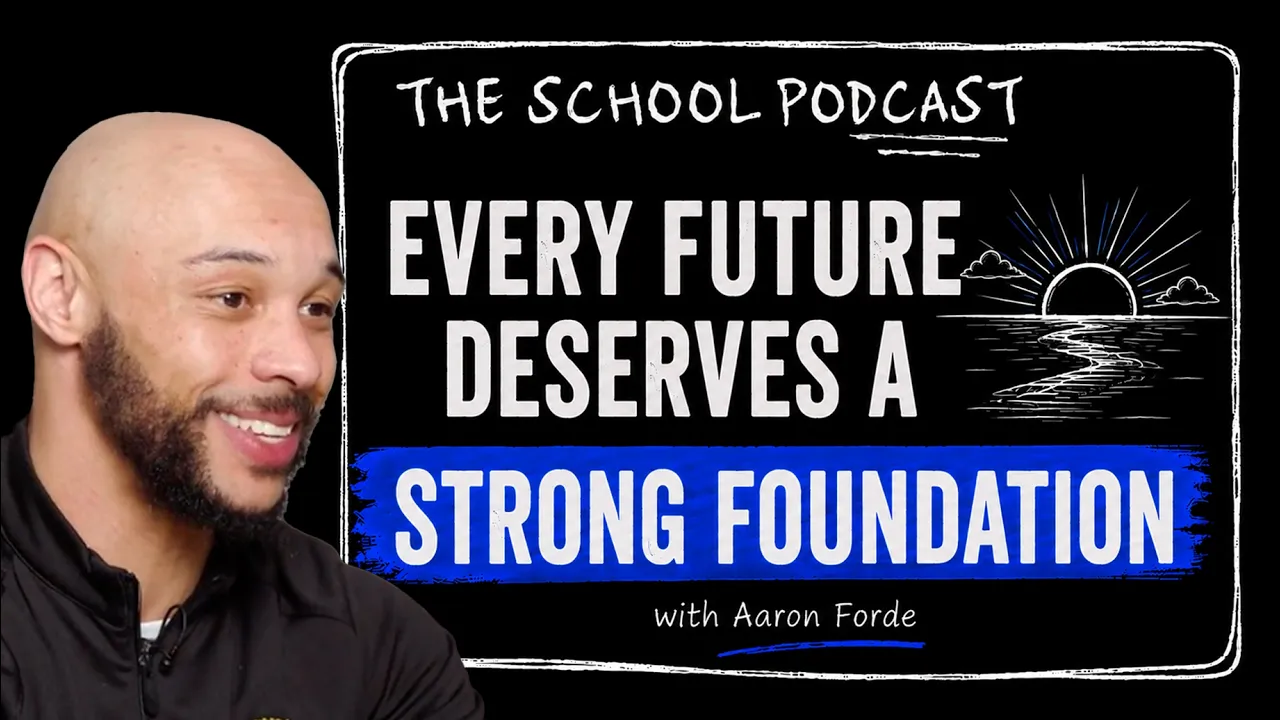
Behaviour, Exclusions & Vulnerable Students –This episode of The School Podcast was a real conversation about behaviour, mentoring and supporting young people properly.
Aaron Forde works with young people across mainstream schools, PRUs, alternative provision and inclusion settings in Birmingham through his organisation, Foundations 4 the Future. What stood out throughout the conversation was simple:
Too many young people are being labelled before they are understood.
 Watch the full interview on YouTube →
Join The School Podcast Newsletter
The #1 source for real impact in education.
Exclusive insights from educational greats, powerful breakdowns, no fluff, just value, clarity and impact straight to your inbox.
Be the first to access exclusive deals, unseen value and early access to upcoming events.
Join now – don’t miss out.
“We’re Giving Up On Too Many Young People”
One of the biggest talking points in this episode was exclusions and the long-term impact they can have on vulnerable students. Aaron spoke honestly about how many young people already arrive in school carrying trauma, instability, rejection or difficult home circumstances. When behaviour breaks down, schools often face impossible decisions balancing standards, safety and learning for everybody else in the classroom.
But the question Aaron kept returning to was: What actually happens after the exclusion?
Are we helping students regulate, reflect and rebuild? Or are we simply moving the problem somewhere else?
It was a grounded conversation with no “magic wand” answers, but an important reminder that behaviour is rarely just behaviour. There is usually something underneath it.
Relationships Matter – But So Do Boundaries
A huge theme throughout the episode was the importance of relationships, relatability and consistency. Aaron explained that young people do not need perfect adults. They need adults who are authentic, calm, honest and consistent. That does not mean lowering standards.
In fact, one of the strongest parts of the conversation was around accountability and “tough love”. Young people still need boundaries. They still need challenge. They still need adults willing to say:
“That behaviour is not acceptable.”
But they also need to know the relationship is still there afterwards.
Too often in education, students feel tolerated rather than genuinely supported. Aaron shared examples of how simple conversations, calm reintegration and consistent follow-up can completely change the relationship between a student and a teacher.
Why Long-Term Mentoring Matters
Another major takeaway from this episode was the danger of short term intervention work.
Both Cameron and Aaron discussed how real impact rarely happens from one off assemblies or quick fixes alone. Relationships take time. Trust takes time. Change takes time.
Aaron spoke about working with some students for years, not weeks. That consistency matters.
Especially for young people who may have experienced adults constantly coming in and out of their lives.
Education Is Bigger Than Academics
One of the most powerful parts of the episode was the discussion around character development and preparing young people for life beyond school. GCSEs matter. Attendance matters. Behaviour matters.
But students also need communication skills, emotional regulation, confidence, resilience and belief in their future.
As discussed throughout the episode, schools across the UK are already doing incredible work under huge pressure. But there is still a growing need for stronger relationships between schools, families, mentors and communities to better support disadvantaged young people.
Watch The Full Episode
This is a real conversation about mentoring, exclusions, inclusion rooms, behaviour systems and the realities of working with young people every day.
If you work in education, pastoral care, behaviour support, alternative provision or leadership, this episode will definitely make you think.
Thanks again to Nisai Learning for sponsoring the episode and supporting flexible education for young people across the UK.