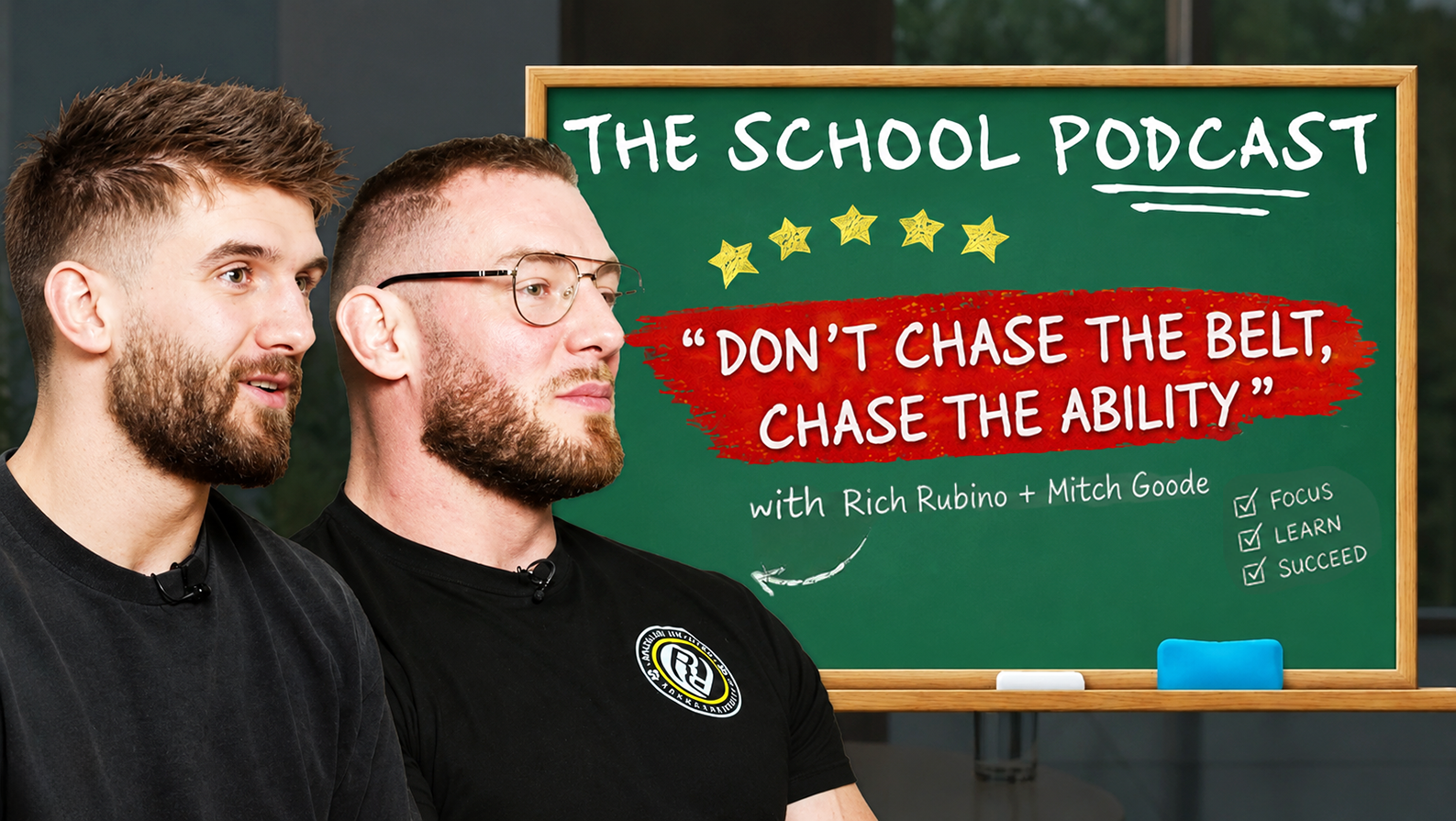
What Education Can Learn From Jiu-Jitsu – Recently on The School Podcast, I sat down with Mitch Goode and Rich Rubino for one of my favourite conversations we’ve had so far. On paper, it was a conversation about jiu-jitsu, martial arts and competition.
In reality, it became a much deeper conversation about young people, behaviour, confidence, motivation, ego, stress and the environments we create around students.
 Watch the full interview on YouTube →
One of the biggest things we discussed was this idea that motivation is unreliable. People love to throw the word motivation around in education, but the truth is most students are not going to wake up every single morning feeling motivated to revise, train or push themselves. The same applies in jiu-jitsu. The people who improve are not always the most motivated, they are often the most consistent.
That is where discipline, routine and environment matter. We also spoke a lot about confidence and competence. Many young people are labelled as disruptive, lazy or difficult, when in reality they simply do not feel competent. If a student constantly feels behind in class, eventually they protect themselves. Sometimes that looks like becoming the joker, switching off or pretending they do not care.
Jiu-jitsu exposes that very quickly. You cannot hide on the mat. You have to learn, adapt, fail, improve and stay calm under pressure. But what makes martial arts so powerful is the environment around it. Good coaches understand people. They know when to push, when to encourage and when to turn the pressure down slightly.
That part really stood out to me. Because whether you are a teacher, coach, parent or leader, relationships matter. Young people are not robots. Some students walk into school already carrying stress from home, friendship issues, low self-esteem or difficult situations we know nothing about.
The conversation also explored ego and masculinity. Challenge, accountability, discipline, humility and learning how to lose without making excuses.
There is so much education can learn from environments like this. Not because every child needs to become a fighter, but because every young person needs belonging, challenge, standards, support and people around them who genuinely care.
That is where real growth happens.
What Education Can Learn From Jiu-Jitsu